Common Dishwasher Problems and  How to Fix Them
Your dishwasher is one of the hardest-working appliances in your home,
cleaning thousands of dishes each year while you focus on more important things.
But when it stops working properly or dishwasher problems, it can throw your entire household routine into chaos.
The good news is that many common dishwasher issues have simple solutions that don’t necessarily require a service call.
Understanding these problems can help you decide whether to attempt a DIY fix or when it’s time to contact a professional repair technician.
Dishes Coming Out Dirty or Spotty
One of the most frustrating dishwasher problems is when your dishes emerge from a cycle still dirty or covered in spots and film.
Before assuming your machine needs major repairs, check a few simple things first.
Start by examining your spray arms.
These rotating arms distribute water throughout the dishwasher, and their small holes can easily become clogged with food particles, mineral deposits, or even small debris.
Remove the spray arms according to your owner’s manual and rinse them under running water, using a toothpick or small wire to clear any blocked holes.
Next, consider your water temperature. Dishwashers need water at least 60°C to properly dissolve detergent and break down grease.
Run your kitchen faucet until the water is hot before starting a cycle, or check your water heater’s temperature setting.
Hard water is another common culprit behind spotty dishes and dishwasher problems.
Mineral buildup can leave a cloudy film on glassware and reduce cleaning effectiveness.
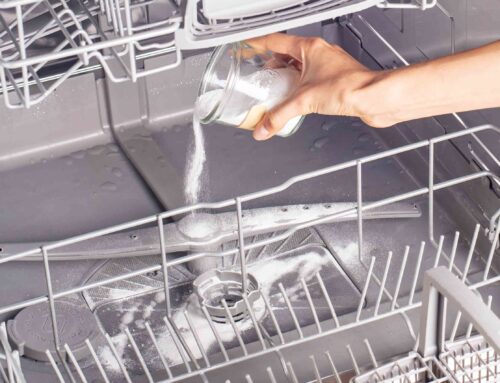
Try running a cycle with a dishwasher cleaner or a cup of white vinegar placed on the top rack to remove mineral deposits.
If you live in an area with hard water, regularly using a rinse aid can prevent spots and improve drying performance.
Finally, make sure you’re not overloading the dishwasher or blocking the spray arms with large items. Proper loading allows water to reach all surfaces of your dishes.
Dishwasher Not Draining Properly 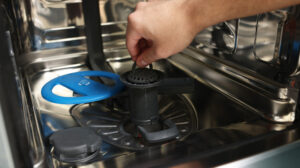
Standing water at the bottom of your dishwasher after a cycle is a clear sign of drainage issues. This problem often stems from a clogged filter or drain.
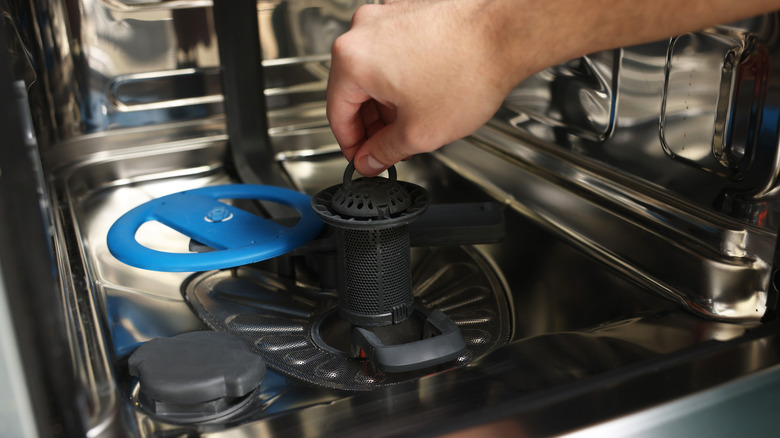
Most modern dishwashers have a removable filter at the bottom of the tub.
This filter catches food particles to prevent them from recirculating onto your dishes, but it needs regular cleaning.
Remove the filter (usually by twisting or lifting) and rinse it thoroughly under running water. Buildup in this filter is one of the most common causes of drainage problems.
Check the drain hose for kinks or clogs as well.
The drain hose connects your dishwasher to your home’s plumbing, and if it’s kinked or blocked, water can’t exit properly.
You may need to disconnect the hose to check for obstructions, to repair dishwasher problems.
If your dishwasher shares a drain with your garbage disposal, make sure the disposal’s drain plug has been removed.
Many people forget this step during installation, which prevents water from draining into the disposal unit.
Strange Noises During Operation
While dishwashers aren’t silent appliances, unusual grinding, humming, or rattling sounds indicate something isn’t right.
A grinding noise often points to a problem with the wash pump or a foreign object caught in the pump housing.
Small items like fruit pits, broken glass, or utensils can fall through the rack and interfere with the pump’s operation.
Turn off the dishwasher and carefully check the bottom of the tub and around the spray arm area for any debris.
Humming without water circulation might indicate a jammed pump motor or other dishwasher problems.
This sometimes happens if the dishwasher hasn’t been used for an extended period and the pump seals have dried out.
Running the dishwasher regularly can prevent this issue, to repair another dishwasher problem.
Rattling sounds are often less serious and may simply be dishes vibrating against each other or spray arms hitting improperly loaded items.
Rearrange your load and ensure the spray arms can rotate freely.
Water Leaking from the Dishwasher 
Leaks can cause water damage to your floors and cabinets, causing a major dishwasher problem, so they require immediate attention.
The source of the leak determines whether you can fix it yourself or need professional help.
Check the door gasket first. This rubber seal around the door opening can become cracked, worn, or covered in debris over time.
Clean the gasket with warm, soapy water and inspect it for damage.
Replacing a worn gasket is relatively inexpensive and can often be done without professional help.
Leaks from the bottom of the dishwasher might indicate a problem with the door latch, pump seal, or hose connections.
These repairs typically require more expertise and may warrant a service call to repair these dishwasher problems.
Using the wrong detergent or too much detergent can also cause leaking.
Only use detergents specifically designed for automatic dishwashers, and follow the manufacturer’s recommended amount.
The Dishwasher Won’t Start
When your dishwasher doesn’t start at all, begin with the simplest explanations, to repair dishwasher problem.
Ensure the door is fully latched, as dishwashers won’t run with an open or improperly closed door.
Check that the dishwasher is receiving power by verifying the circuit breaker hasn’t tripped.
Many dishwashers have a control lock feature designed to prevent children from starting the appliance.
If buttons aren’t responding, you may need to deactivate this lock according to your owner’s manual.
If the dishwasher still won’t start, the issue might be with the door latch assembly, thermal fuse, or control board,
all of which typically require professional diagnosis and repair.
When to Call a Professional
While many dishwasher problems have simple solutions, some issues require professional expertise.
If you’ve tried basic troubleshooting without success, notice electrical issues, smell burning odors, or encounter problems with the motor,
pump, or control board, it’s time to contact a qualified appliance repair technician.
Regular professional maintenance can also extend your dishwasher’s lifespan and prevent costly breakdowns.
Understanding these common dishwasher problems empowers you to maintain your appliance better and know when a simple fix will solve the issue versus when professional help is necessary.
Click Here for access to the blog page for more helpful hints and advise, for all home appliances and Wiser and Pixie technology.
Click Here to book an appointment to get all your home appliances repaired, serviced or new appliances installed, or Wiser and Pixie devices added to your Smart Home.