Understanding Smart Thermostats
The humble smart thermostats have come a long way since the days of mechanical dials and rigid programmable schedules. 
As the centerpiece of the modern climate-controlled home, the smart thermostats represents one of the most impactful upgrades you can make to your living space.
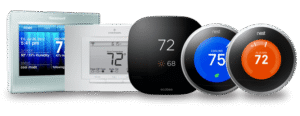
Far from being just a digital thermometer on the wall, these devices act as the central nervous system for your heating, ventilation, and air conditioning (HVAC) systems.
Whether you are looking to slash your monthly utility bills,
reduce your environmental footprint, or simply enjoy a home that is always perfectly conditioned to your preference,
this ultimate guide breaks down the core features and benefits of upgrading to a smart thermostat.
Core Features: What Makes a Thermostat “Smart”
To understand the value of a smart thermostat, it helps to look at the advanced technology packed into these sleek devices.
Unlike older models that require manual overrides, smart thermostats leverage connectivity and data to manage your home’s climate automatically.
1. Wi-Fi Connectivity and Remote Control
At its foundation, a smart thermostat connects directly to your home’s wireless network.
This enables remote control via a smartphone, tablet, or smartwatch app.
Whether you are lying in bed and want to take the chill out of the air, or you are at the airport realizing you left the air conditioning running,
you have complete control over your home’s temperature from anywhere in the world.
2. Learning Algorithms and Automation
The true “smart” aspect comes from machine learning.
Premier models track your daily habits, noting what time you wake up, when you leave for work,
and what temperature you prefer for sleeping. Within a week or two,
the device creates a highly accurate, personalized schedule without you ever having to program a single hour manually.
3. Geofencing Capabilities
Geofencing uses your smartphone’s GPS location to determine whether you are home or away.
You can establish a virtual perimeter around your property; when your phone crosses that boundary,
the thermostat adjusts. It will enter an energy-saving “eco-mode” when you leave for the day
and begin warming or cooling the house as you approach your neighborhood on your commute home.
4. Remote Sensor Integration
Traditional thermostats only measure the temperature of the hallway or room where they are mounted,
leading to hot or cold spots in upstairs bedrooms or basement offices.
Modern smart systems allow you to place small, wireless remote sensors in key rooms.
The thermostat can then prioritize the temperature of the room you are currently using, ensuring balanced comfort throughout the house.
Key Benefits: Why You Should Upgrade
Investing in a smart thermostat delivers a high return on investment, blending financial savings with modern convenience.
Significant Cost Savings
The most compelling argument for making the switch is the impact on your wallet.
Because these devices eliminate wasteful heating and cooling in an empty home, they quickly pay for themselves.
Leading manufacturers like Nest and Ecobee report that users save an average of $10\%$ to $15\%$ on heating bills
nd roughly $15\%$ on cooling costs annually. Over a couple of seasons, the device completely offsets its initial purchase price.
Detailed Energy Insights
Knowledge is power when it comes to resource consumption.
Smart thermostats provide comprehensive energy history reports directly through their apps.

You can view exactly how many hours your HVAC system ran each day,
ee how changes in the outdoor weather impacted your indoor usage,
and receive tailored tips on how to tweak your habits for even greater efficiency.
System Health and Maintenance Alerts
An HVAC system breakdown can be an expensive, stressful emergency.
Smart thermostats act as early-warning systems for your property.
They can send push notifications if your home’s temperature drops dangerously low (risking frozen pipes) or climbs unexpectedly high.
Additionally, they track system runtime to remind you exactly when it is time to change your air filters or schedule a routine professional maintenance check.
Seamless Smart Home Integration
For those building a connected ecosystem, a smart thermostat acts as a critical anchor component.
They integrate flawlessly with voice assistants like Amazon Alexa, Google Assistant, and Apple Home, Pixie.
This allows you to adjust your home’s climate with simple voice commands, or tie your temperature settings into custom “scenes”
—such as dimming the smart lights and lowering the thermostat simultaneously when you say, “Goodnight.”
Final Thoughts
The transition to a smart thermostat is one of the easiest, most accessible entry points into home automation.
By removing human error from climate control, these devices guarantee you never waste money heating or cooling an empty house again.
Combining unparalleled convenience with tangible financial payback, upgrading to a smart thermostat is an intelligent move for both your lifestyle and your budget.
Click Here for access to the blog page for more helpful hints and advise, for all home appliances and Wiser and Pixie technology.
Click Here to book an appointment to get all your home appliances repaired, serviced or new appliances installed, or Wiser and Pixie devices added to your Smart Home.