Reasons for ceramic glasstop cooktop cracks
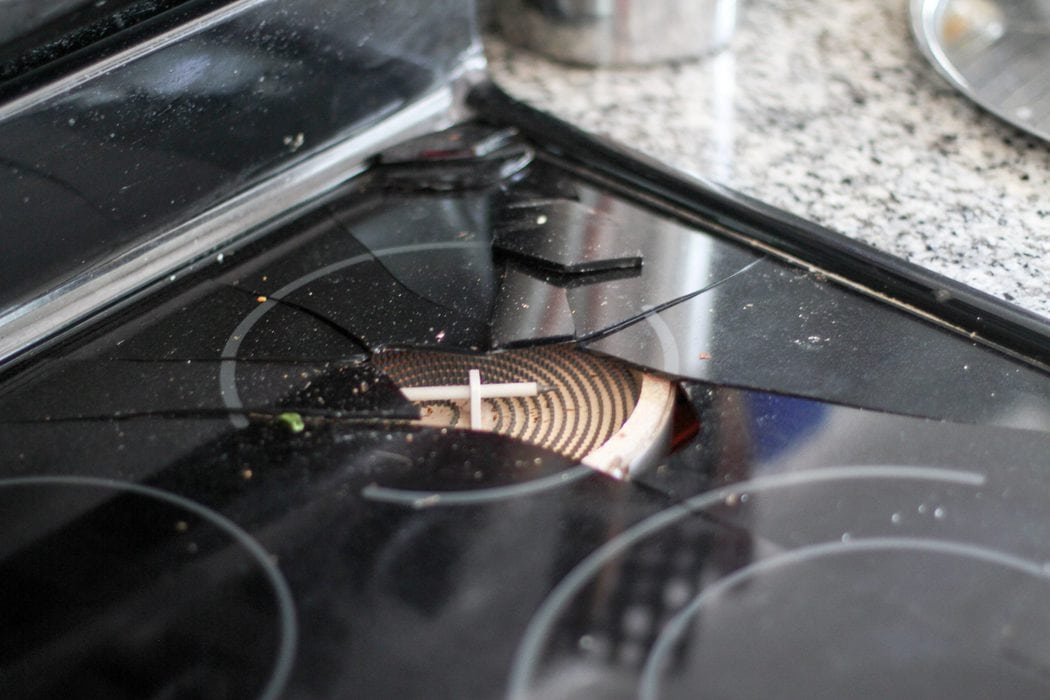
When a ceramic glass cooktop suddenly fractures, it can be a frustrating and confusing event for a homeowner, landlord, or tenant.
This is especially true when the appliance hasn't been subjected to an obvious impact, such as a dropped heavy pot or a misplaced cast-iron skillet.
One of the most specific environmental scenarios involves a stovetop that has sat completely idle in an unheated property for an extended period
such as a month during a freezing winter—and then snaps or cracks the very moment it is turned back on. 
While it might seem improbable that simply turning on an appliance could cause it to break itself,
the phenomenon is grounded in materials science and thermodynamics.
It is a textbook case of structural failure due to thermal shock.
Below, we break down the core reasons why a long winter dormancy followed by a sudden activation creates the perfect storm for ceramic glass cooktop failure.
1. The Core Culprit: Severe Thermal Gradients
The modern ceramic glass cooktop do not use standard residential window glass; they utilize a highly engineered lithium-aluminosilicate glass-ceramic material.
This specialized material is chosen because it has an incredibly low coefficient of thermal expansion,
meaning it expands very little when subjected to intense, uniform heat. It can routinely withstand temperatures upward of 500deg C without breaking.
However, its weakness lies not in high temperatures, but in rapid temperature differentials (known as localized thermal gradients).
When a property sits vacant or unheated for a month in winter, the ambient temperature of the kitchen,
and the cooktop assembly itself, drops significantly, often sinking to anywhere between 2 to 10 deg C.
When a user returns and turns a heating element on,
the temperature directly above that specific burner spikes from freezing to several hundred degrees in a matter of seconds.
This creates a massive temperature difference across a distance of just a few millimeters:
The Hot Zone: The microscopic space directly over the coil expands rapidly as it heats.
The Cold Zone: The vast perimeter of the glass surrounding the burner remains trapped at a rigid, ice-cold winter temperature.
As the hot zone tries to expand outward, the cold, contracted zone refuses to budge.
This opposing force creates an immediate, immense internal tug-of-war, subjecting the glass matrix to extreme tensile stress.
If this stress exceeds the ultimate mechanical strength of the glass-ceramic, the material splits apart instantly.
2. Increased Material Brittleness in Prolonged Cold
While ceramic glass cooktop is highly resilient,
all materials experience slight changes in their molecular behavior at low temperature extremes.
Sitting in a freezing, unheated room for a month allows the entire chassis,
glass plane, and underlying housing of the cooktop to cold-soak completely.
In this deeply chilled state, the material is at its most contracted and rigid.
It lacks the minute molecular flexibility it possesses when sitting at a comfortable, warm room temperature.
Because the material is slightly more brittle when cold-soaked,
it loses some of its capacity to absorb sudden mechanical or thermal kinetic shifts, 
making it significantly more susceptible to fracturing under sudden stress.
3. The Activation of Invisible Micro-Fractures
In a kitchen environment, a stovetop is exposed to microscopic daily wear and tear.
Sliding heavy cookware across the surface, cleaning with mildly abrasive sponges,
or micro-impacts from salt crystals can create microscopic scratches or sub-surface cracks.
Often, these are entirely invisible to the naked eye.
When a cooktop is used regularly, the temperature fluctuations are typically gentler because the house is heated and the unit rarely drops to near-freezing.
However, when the cooktop is cold-soaked,
the intense tensile stress generated upon turning a burner on concentrates heavily at the sharpest points of any pre-existing micro-scratch.
In engineering, this is known as a stress concentration or a "stress riser."
The microscopic scratch acts like a perforation on a piece of paper;
when the thermal expansion pulls the glass apart, the crack tears open cleanly along that weakest path.
The winter cold start didn't necessarily create the initial microscopic flaw, but it provided the brutal forces required to break it wide open.
4. Frame Contraction and Structural Pinching
It isn't just the glass that reacts to a month of winter cold.
The metal housing, brackets, and kitchen cabinetry surrounding the cooktop contract as well.
Metals like aluminum or steel have a much higher coefficient of thermal expansion than ceramic glass, meaning they shrink noticeably more in the cold.
A month of winter temperatures can cause the metal retaining frame or clips holding the cooktop in place to contract tightly around the perimeter of the glass.
When a burner is turned on, the glass tries to expand against a metal frame that has shrunk and is tightly pinching its edges.
Without the proper clearance or "give" to expand safely, the physical restriction creates a secondary layer of mechanical stress, pushing the glass past its breaking point.
How to Prevent It: The "Tempering" Method
If an electric or ceramic glass cooktop has been left in a cold environment for an extended period, you can mitigate the risk of thermal shock with a simple habit:
Never turn a cold burner straight to "High" or "Boost".
Instead, turn the element on a low setting (e.g., level 2 or 3) for two to three minutes.
This allows a small, gentle amount of heat to bleed outward through the glass matrix,
slowly raising the temperature of the surrounding "cold zones" and relieving internal tension before maximum heat is applied.
Click Here for access to the blog page for more helpful hints and advise, for all home appliances and Wiser and Pixie technology.
Click Here to book an appointment to get all your home appliances repaired, serviced or new appliances installed, or Wiser and Pixie devices added to your Smart Home.